Ziheng
He.
PhD student in artificial intelligence. I work on embodied world models, video generation for robotics, and training manipulation policies from generated data.
About
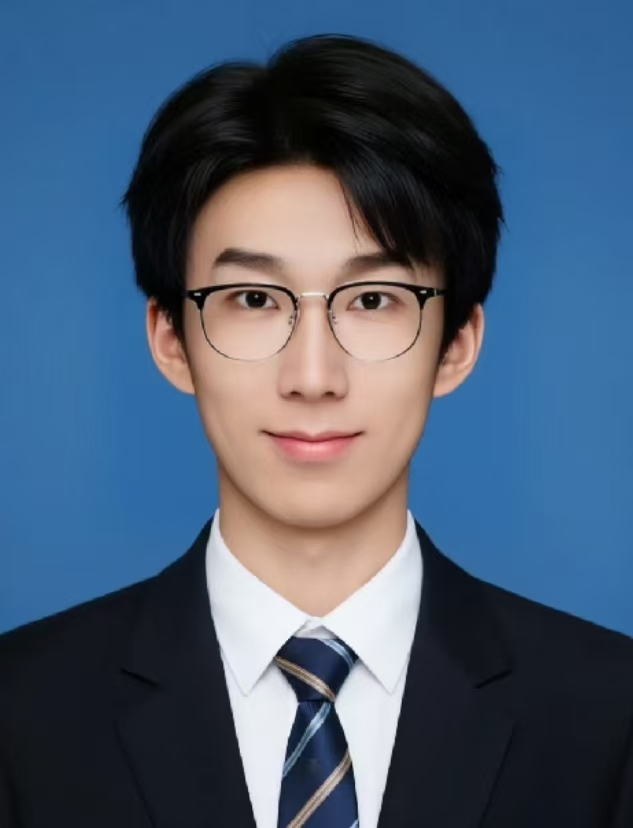
I'm Ziheng, a PhD student in artificial intelligence. I work on embodied world models — predicting how a robot's actions change the scene around it — and on making video generation efficient enough to train real manipulation policies.
I like working across the whole stack — the generative models themselves and the tooling to train and evaluate them — and I care about results that hold up on real robots, not just on benchmarks.
Research
Centered on embodied world models — from the world model itself, to video generation for robotics, to robot policy learning.
Embodied World Models
Modeling how a robot's actions reshape the surrounding scene, and making rollout inference for long-horizon manipulation efficient.
Video Generation & Diffusion
Sparse keyframe synthesis, video diffusion, and action-conditioned interpolation — cutting generation cost while preserving task-critical events.
Robot Learning & Manipulation
Training manipulation policies (e.g. VLA, π0.5) on generated video data, validated on benchmarks like LIBERO and on real robots.
Stack
The tools and languages I work with day to day.
Activity
Commits and milestones over the past year.
Loading GitHub contributions…
Education
A path through textbooks, labs, and open-source communities.
Ph.D. in Artificial Intelligence
Ph.D. in artificial intelligence at the School of Advanced Interdisciplinary Sciences (SAIS), University of Chinese Academy of Sciences.
Ph.D. in Artificial Intelligence
Research in artificial intelligence at the Institute of Automation (NLPR), Chinese Academy of Sciences.
B.Eng. in Software Engineering
B.Eng. in Software Engineering at Southeast University.
Experience
Embodied-AI research on the industry frontline.
Research Intern
Research on embodied world models and video generation; member of the GigaBrain team.
Research Intern
Research internship in embodied intelligence.
Research Work
First-author and collaborative research. Future work will appear on Google Scholar.
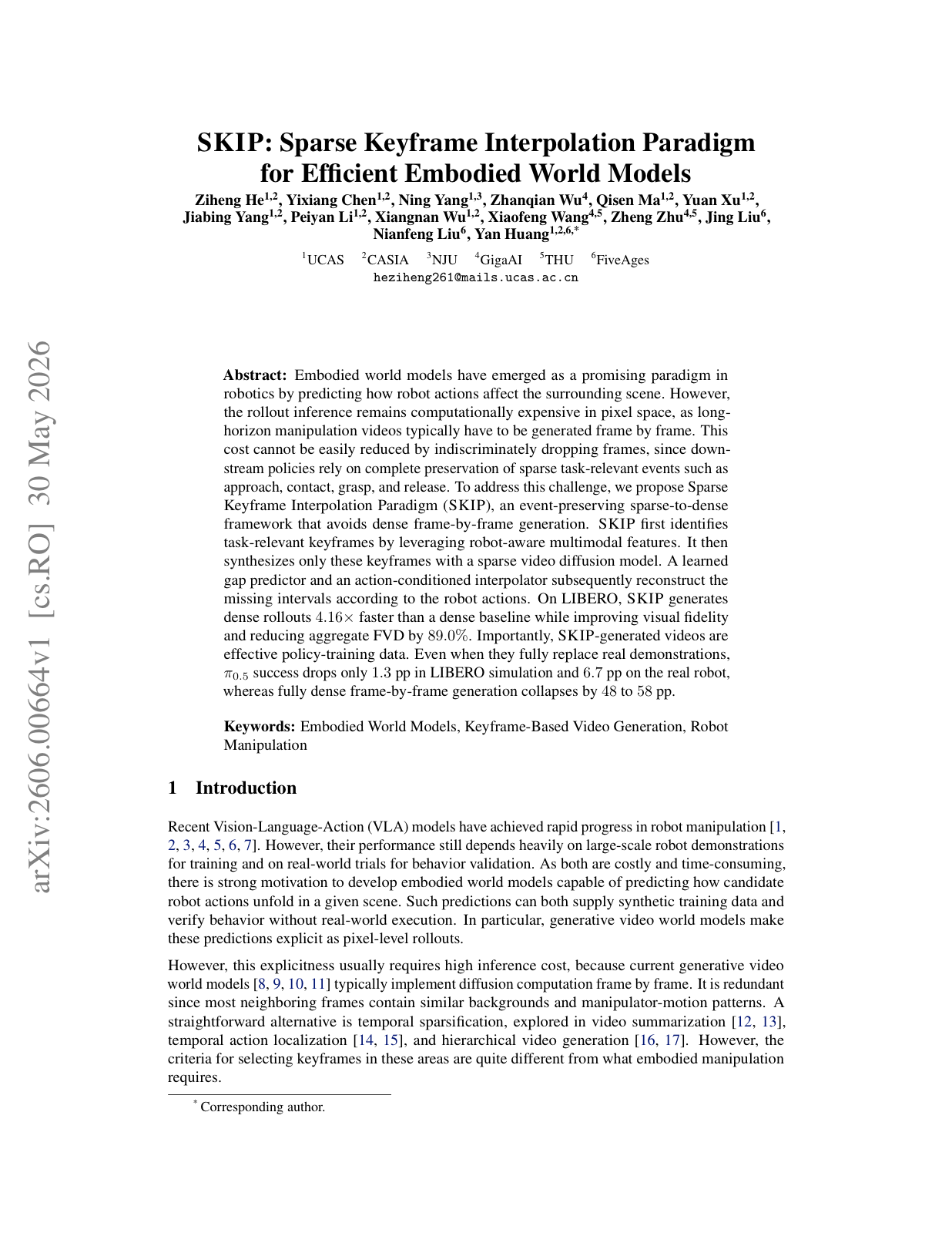
SKIP: Sparse Keyframe Interpolation Paradigm for Efficient Embodied World Models
Ziheng He, Yixiang Chen, Ning Yang, et al. · Conference on Robot Learning (CoRL) 2026 · Accepted Sep 5, 2026
Sparse Keyframe Interpolation (SKIP) is an event-preserving, sparse-to-dense framework for embodied world models: it synthesizes only task-relevant keyframes with a sparse video diffusion model, then interpolates the missing intervals conditioned on robot actions — avoiding dense frame-by-frame rollout. On LIBERO it runs 4.16× faster than a dense baseline while cutting FVD by 89.0%, and its generated videos work directly as policy-training data.
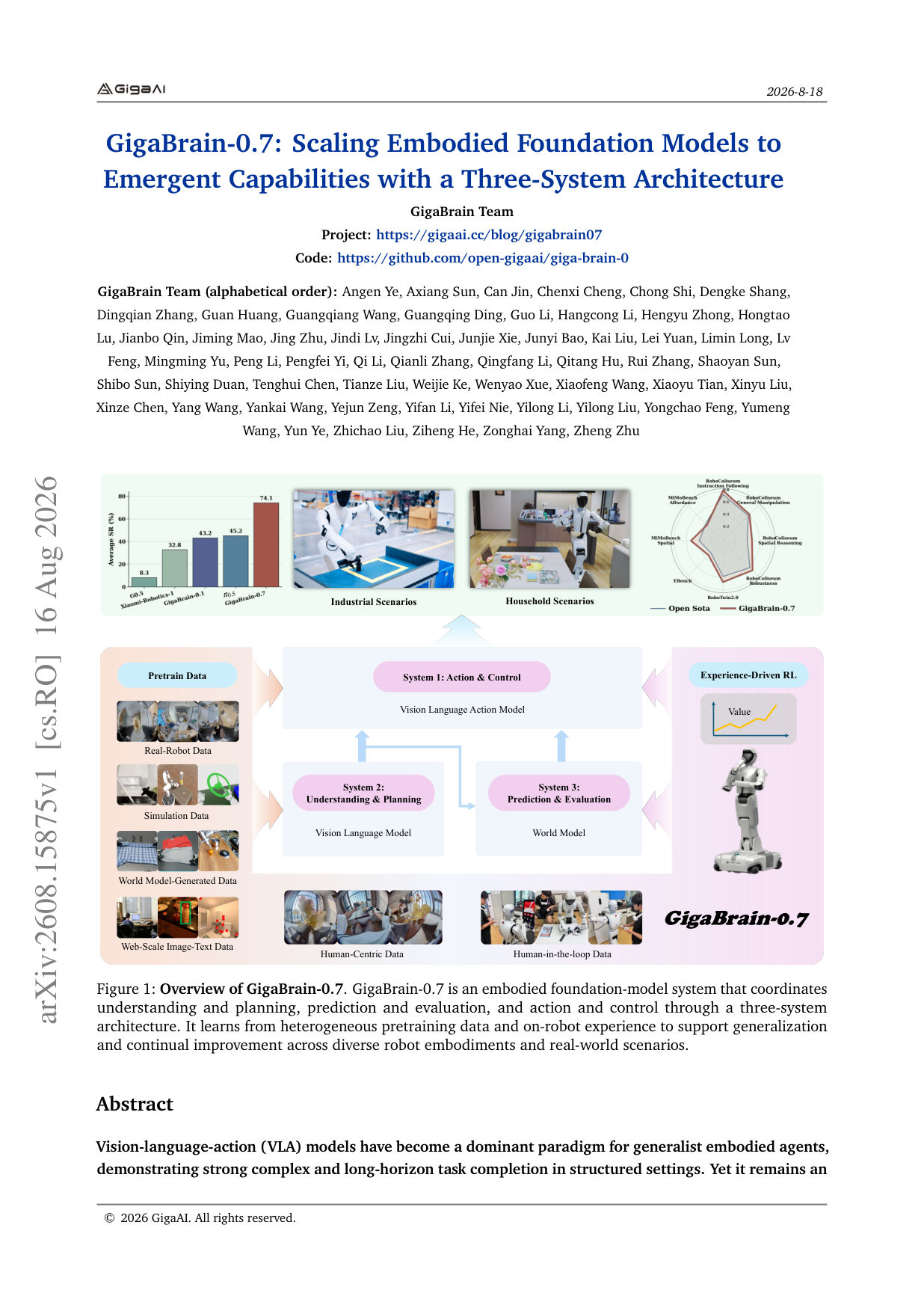
GigaBrain-0.7: Scaling Embodied Foundation Models to Emergent Capabilities with a Three-System Architecture
GigaBrain Team (incl. Ziheng He) · arXiv preprint · cs.RO
An embodied foundation model built on a three-system architecture, scaling the VLA paradigm to larger, more heterogeneous data regimes with substantially improved generalization across tasks and robot embodiments.
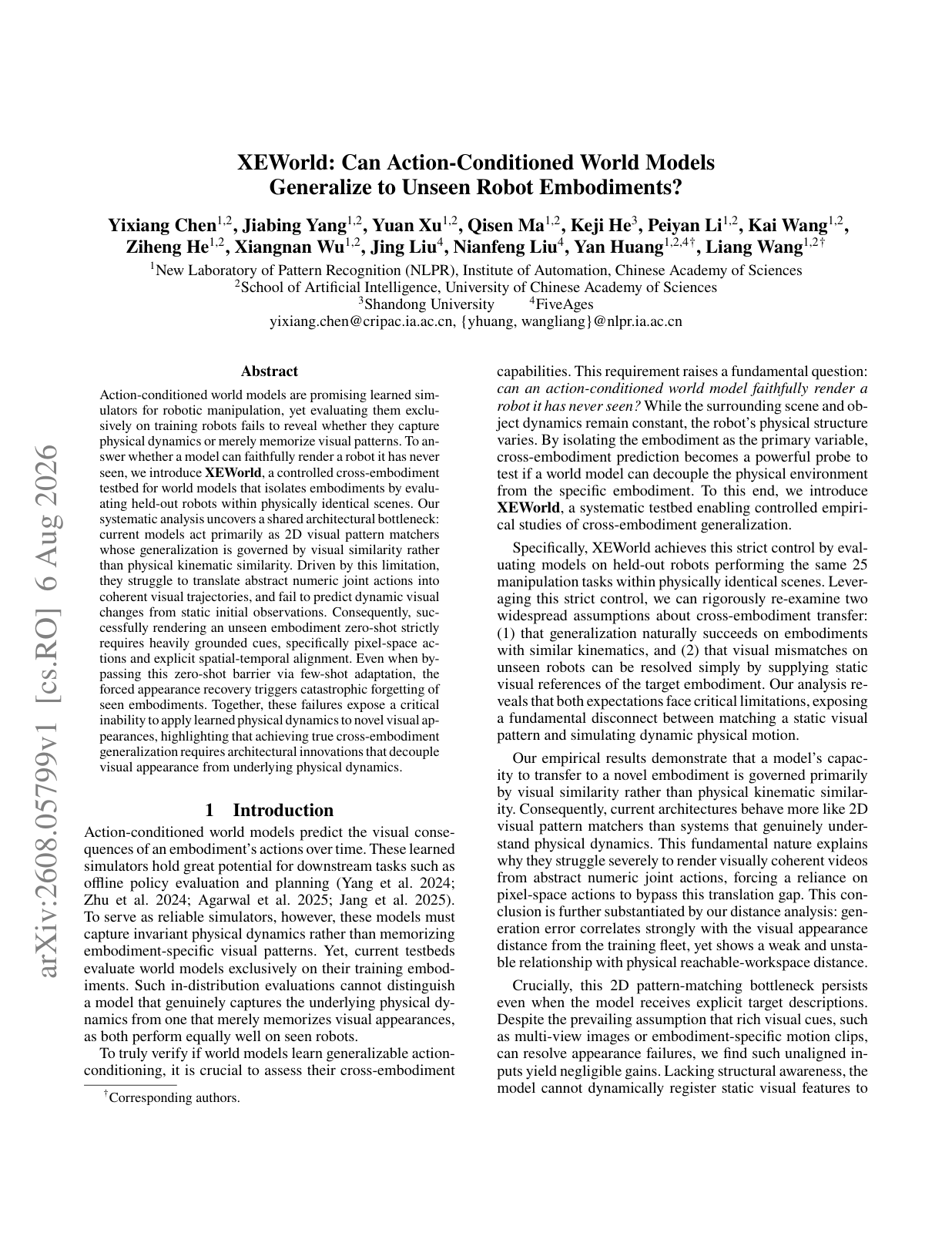
XEWorld: Can Action-Conditioned World Models Generalize to Unseen Robot Embodiments?
Yixiang Chen, Jiabing Yang, Yuan Xu, Qisen Ma, Keji He, Peiyan Li, Kai Wang, Ziheng He, et al. · arXiv preprint · cs.RO
A controlled cross-embodiment testbed that evaluates world models on held-out robots within physically identical scenes. Systematic analysis uncovers a shared bottleneck: current models act primarily as 2D visual pattern matchers rather than capturing physical dynamics.
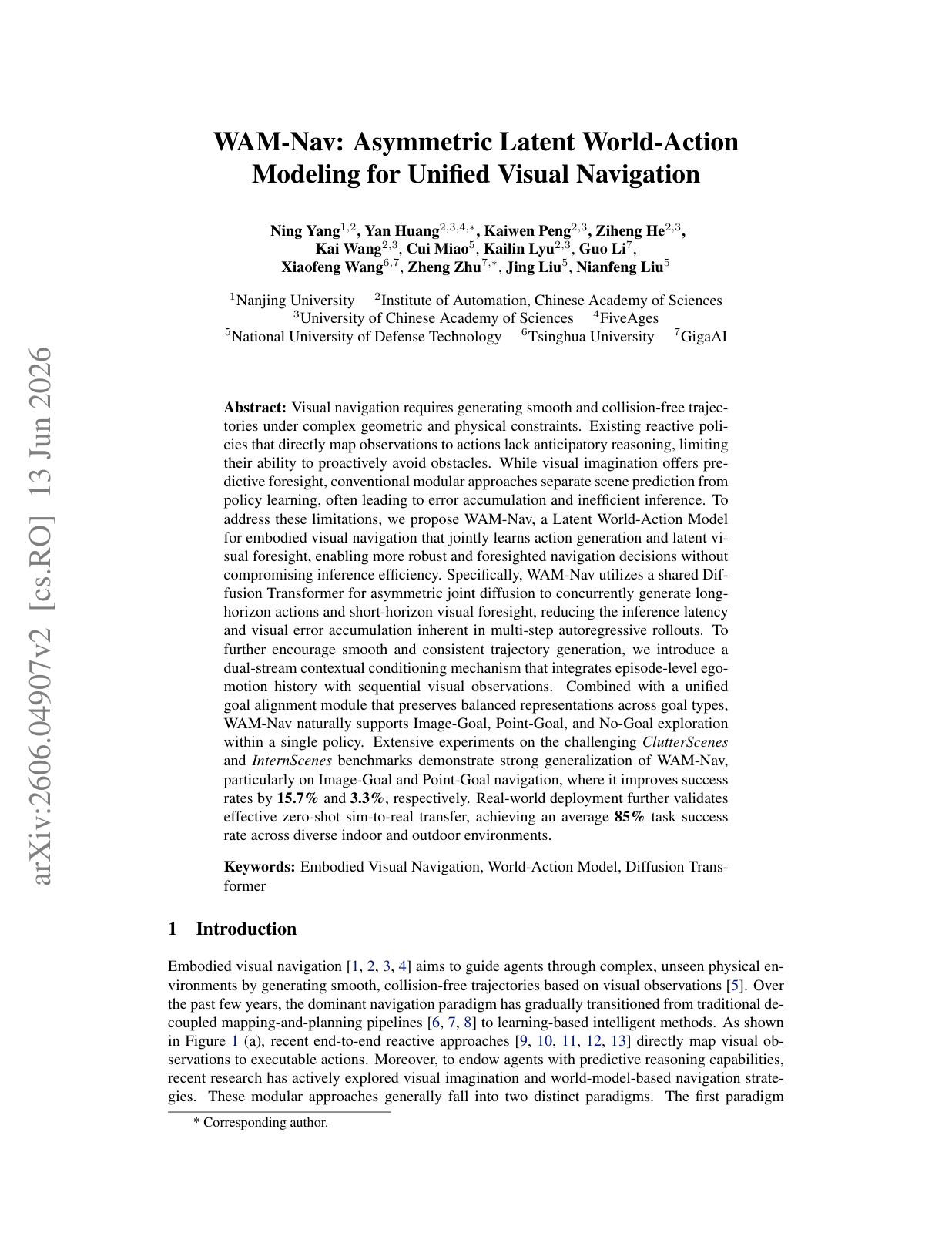
WAM-Nav: Asymmetric Latent World-Action Modeling for Unified Visual Navigation
Ning Yang, Yan Huang, Kaiwen Peng, Ziheng He, et al. · arXiv preprint · cs.RO
A latent world-action model for embodied visual navigation that jointly learns scene prediction and policy, giving navigation anticipatory reasoning while avoiding the error accumulation and slow inference of modular pipelines.
Notes
Inspired by Super.so — notes open in an in-site reader styled to match this page, not a raw Notion page. Content is written in Notion and synced here.